

Selecting the right actuator for a butterfly valve is one of the most critical decisions in fluid handling system design. The actuator determines how the valve is operated – by hand, by a gear train, or automatically via electrical or pneumatic signals. Choosing incorrectly can lead to unsafe conditions, excessive maintenance costs, or simply an inability to control the process effectively.
This guide walks you through the four most common butterfly valve actuator types – manual lever, worm gear, electric, and pneumatic – and explains where each one shines. By the end, you’ll know exactly which actuator to specify for your next project, whether you’re designing a fire protection loop, a chemical plant, or an HVAC system.
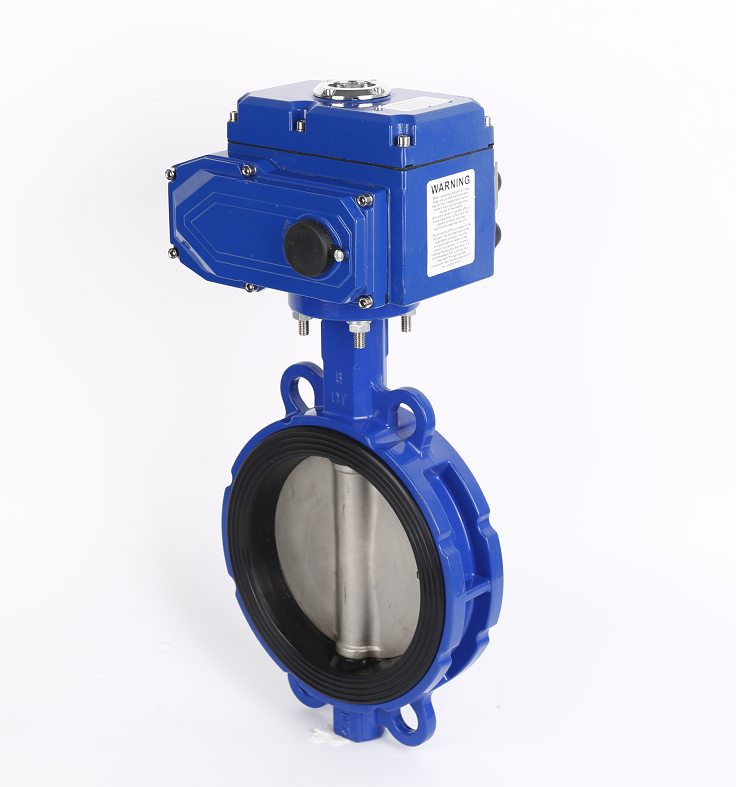
Manual Lever Actuators: Simple, Fast, and Direct
The lever handle is the most basic butterfly valve actuator you’ll find. It consists of a steel handle bolted directly onto the valve stem. The operator simply grips the handle and rotates it a quarter turn (90°) to move the disc from fully closed to fully open.
1.Why choose a lever actuator?
Speed and simplicity. A lever actuator can open or close a valve in under two seconds. No tools, no gear reduction, no power source – just human muscle and a clear visual indicator. When the handle is parallel to the pipe, the valve is open. When perpendicular, it’s closed. Many designs include a lockable notched plate that allows you to secure the disc at intermediate positions (typically 4 to 8 detents) for throttling or partial flow.
2.Limitations you must know
Because the operator applies force directly, lever handles are only practical for smaller valves – generally up to DN300 (12 inches). Above that size, the torque required to compress the seat and overcome line pressure becomes too high for a single person to handle comfortably. DN50 to DN150 is the sweet spot, especially at pressures up to 1.6 MPa.
3.Real-world applications
Lever-actuated butterfly valves are the standard choice for:
- Fire protection branch zones (DN50–DN80) where quick manual shutoff is needed
- HVAC isolation valves in mechanical rooms
- Utility water lines where cost and simplicity matter more than remote control
Worm Gear Actuators: High Torque, Self-Locking, Reliable
When valve sizes grow beyond DN300 or system pressures climb, the lever handle becomes impractical. That’s where the worm gear actuator takes over. This device uses a handwheel to turn a worm screw, which drives a sector gear connected to the valve stem. The gear ratio – typically between 30:1 and 60:1 – multiplies the operator’s input force dramatically.
1.How it works in practice
A typical worm gear actuator requires 10 to 15 handwheel rotations to stroke the valve from fully closed to fully open (the valve only needs 90° of output rotation). That sounds slow, but the mechanical advantage is enormous. A single operator can comfortably actuate a DN300 butterfly valve against 1.6 MPa pressure – something physically impossible with a lever handle.
2.The self-locking feature
Worm gear designs are inherently self-locking. The geometry of the worm and wheel prevents the valve disc from being back-driven by flow forces. This means you don’t need a brake or a holding device. The disc stays exactly where you leave the handwheel, even under high differential pressure or vibration. For applications where safety and position-holding are critical, this is a major advantage.
3.Where gear actuators dominate
- Large-diameter water distribution lines (DN350 and above)
- Wastewater treatment plants with slow but reliable manual operation
- Industrial process lines where a handwheel provides better fine control than a lever
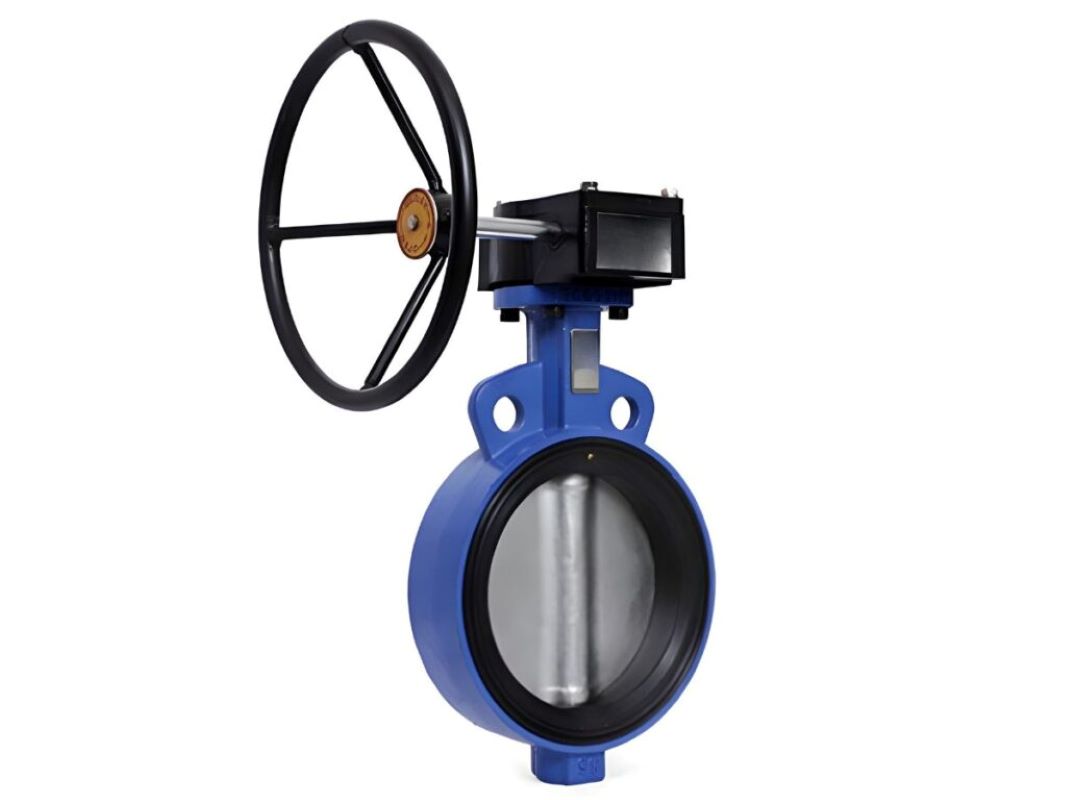
Electric Actuators: Automation, Precision, and Remote Control
Electric actuators (often called motor-operated valves or MOVs) replace manual effort with an electric motor and reduction gearbox. They connect directly to control systems – PLCs, building management systems (BMS), SCADA, or fire alarm panels – and respond to command signals.
1.Two main types
- On/off (non-modulating) actuators: These drive fully open or fully closed based on a two-state signal (e.g., 24 V DC or 120 V AC). Perfect for isolation valves that only need two positions.
- Modulating actuators: These accept an analog signal – typically 4–20 mA or 0–10 V – and can position the disc at any angle between 0° and 90°. Used for throttling service, pressure regulation, or flow control loops.
2.Special variants for demanding environments
Electric actuators are available in explosion-proof enclosures (Ex d or Ex e) for hazardous areas like oil refineries or grain handling facilities. There are also spring-return electric actuators that drive to a fail-safe position (open or closed) when power is lost – useful for emergency shutdown applications where you can’t rely on compressed air.
3.Advantages and trade-offs
Pros:
- Remote operation and automation
- Precise positioning (especially modulating types)
- No need for compressed air infrastructure
- Status feedback and diagnostics available
Cons:
- Slower than pneumatic actuators (typically 5–15 seconds for a full stroke)
- Requires power supply and control wiring
- Higher initial cost than manual or gear actuators
- Some designs have limited cycle life for frequent throttling
Electric actuators are ideal for building automation, irrigation systems, pump control panels, and any application where operators are not physically present at the valve.
Pneumatic Actuators: Speed, Safety, and Fail-Safe Simplicity
Pneumatic actuators use compressed air to drive a piston or a scotch-yoke mechanism that rotates the butterfly valve stem. They are the fastest actuators on the market – a DN200 valve can go from fully open to fully closed in two to five seconds. That kind of speed is essential for emergency shutdown (ESD) systems.
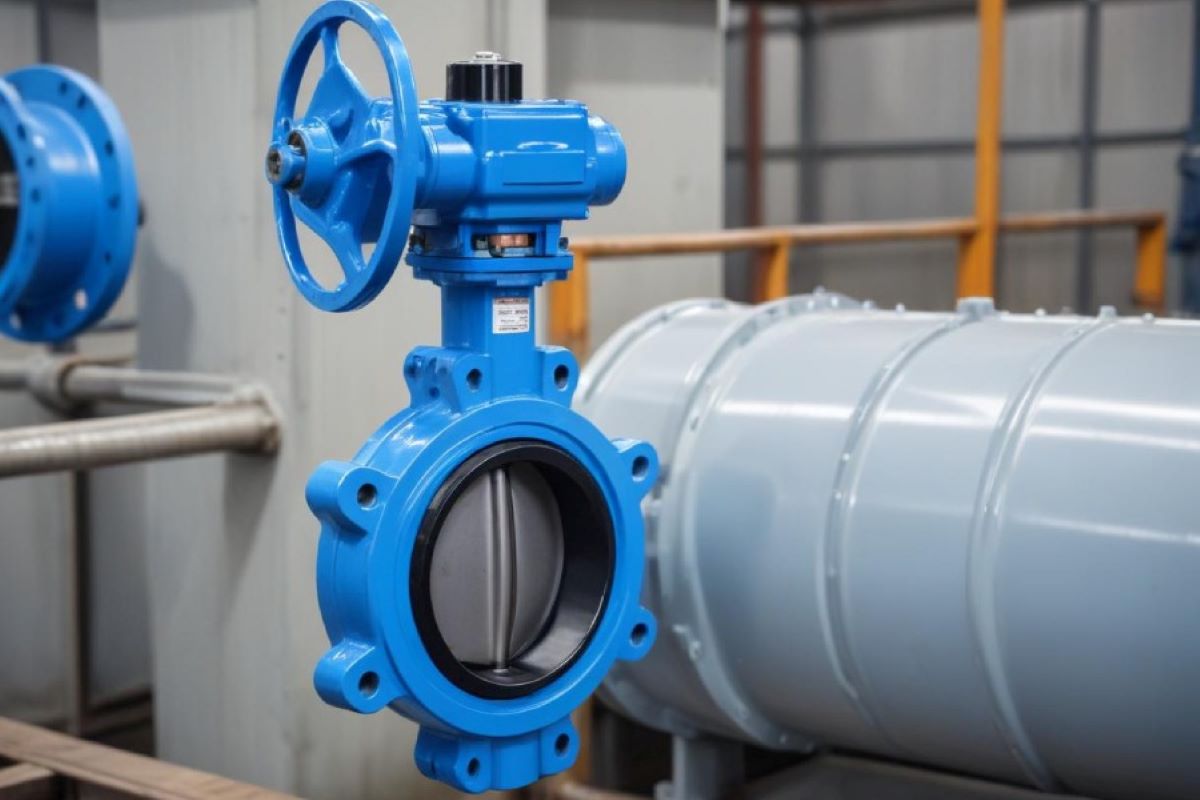
1.Single-acting vs. double-acting
- Spring-return (single-acting): Air pressure moves the valve to one position (e.g., open), and a spring returns it to the fail-safe position (closed) when air is vented. This gives inherently fail-safe operation without any external power.
- Double-acting: Air pressure drives the valve in both directions. If air supply is lost, the valve stays in its last position – so you need to evaluate whether that’s acceptable for your process.
2.Why pneumatic is popular in hazardous areas
Pneumatic actuators contain no electrical components in the actuating mechanism. There is no spark risk, no need for explosion-proof enclosures, and no concern about heat generation. That makes them the default choice for chemical plants, petrochemical refineries, offshore platforms, and paint spray booths.
3.Speed and cycle life
Because compressed air can be exhausted almost instantly, pneumatic actuators cycle much faster than electric or manual ones. They also handle high cycle rates (thousands of operations per day) without overheating – electric motors would burn out under the same duty.
4.The infrastructure catch
You need a clean, dry compressed air supply at the right pressure (typically 4–7 bar). In many industrial plants, plant air is already available. But in a commercial building or a remote water station, installing an air compressor and dryer adds significant cost. For those sites, electric actuators often make more sense.
- Typical applications
- Emergency shutdown valves in fuel gas or chemical lines
- Deluge systems and water mist fire protection (where rapid valve operation is required)
- Process control loops that demand fast response
- Any hazardous area where electrical ignition must be avoided
Never guess the torque requirement. Butterfly valve torque varies with pressure, temperature, disc material, seat type (e.g., EPDM, PTFE, metal-seated), and dynamic flow conditions. Always consult the valve manufacturer’s torque data and add a safety margin (typically 25–30%) for your actuator selection. Undersized actuators lead to stuck valves, while oversized ones waste money and may damage the valve stem or disc.
By understanding these four actuator families – manual lever, worm gear, electric, pneumatic – you can confidently specify the right solution for any butterfly valve application, from a simple irrigation line to a high-stakes chemical reactor isolation.
Post time: May-20-2026