

Short Description:
Check valves quietly protect pumps, compressors, and entire piping systems from backflow damage. Here’s why they matter and how to select them.
Introduction
If you’ve ever looked at a piping system and wondered why there’s a valve that has no handle, no lever, no actuator—just a mysterious lump of metal sitting quietly in the line—you’ve probably found a check valve.
Check valves don’t get much attention. They’re not flashy. You can’t turn them on or off. They don’t adjust flow. They just sit there, doing one simple job: letting fluid go one way and stopping it from coming back.
But here’s what most people don’t realize: that simple job is one of the most critical functions in any fluid system. When a check valve fails, the consequences can be catastrophic. Pumps get destroyed by reverse rotation. Compressors suffer water hammer damage. Contaminated fluids flow back into clean processes. In extreme cases, entire systems can fail, causing expensive downtime and safety hazards.
The truth is, check valves are the silent guardians of your piping system. They work behind the scenes, protecting upstream equipment, maintaining system pressure, and preventing the kind of backflow events that can cost you thousands of dollars in repairs.
In this guide, we’ll break down exactly why check valves matter, how they work, and what you need to know to select the right one for your application.
What Is a Check Valve and How Does It Work?
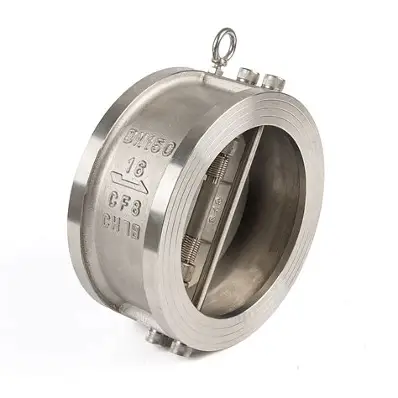
A check valve—also called a non-return valve or one-way valve—is a mechanical device that allows fluid to flow in only one direction . It has two ports: an inlet and an outlet. When fluid flows in the forward direction, the valve opens automatically. When flow stops or reverses, the valve closes.
The key word here is automatically. Check valves don’t need handles, levers, actuators, or human intervention . They rely entirely on the pressure differential across the valve to open and close.
Here’s how it works in practice:
- Forward flow: Upstream pressure pushes the internal closure element (a disc, ball, or plate) off its seat, allowing fluid to pass through.
- Reverse flow: When upstream pressure drops or downstream pressure rises, the closure element is pushed back against the seat, blocking the flow path.
The minimum pressure required to open a check valve is called the cracking pressure . This varies by design and size—typically between 1 and 5 psi for most industrial check valves. Once open, the valve stays open as long as there’s sufficient forward flow to keep the closure element lifted. When flow stops or reverses, the valve closes.
There’s one more thing to understand: the degree of opening depends on the flow rate. Higher flow pushes the valve more fully open. Most check valves reach their full-open position at around 85 degrees of disc travel. This means proper sizing is critical—a valve that’s too large won’t open fully under normal flow, causing chatter and premature wear.
Why Check Valves Are Critical – The Real-World Consequences
So what happens when a check valve fails or is missing? Let’s look at the real-world consequences.
Protecting pumps from reverse rotation
This is the most common and most important application. When a pump shuts down, the fluid in the discharge line can reverse direction and flow back through the pump. This causes the pump impeller to spin backwards—sometimes at high speed. The result? Damaged bearings, bent shafts, and in severe cases, complete pump failure .
A properly functioning check valve immediately downstream of the pump stops this reverse flow before it can start. The valve closes the moment forward flow stops, protecting the pump from damage.
Preventing water hammer damage
Water hammer is a pressure surge that occurs when fluid in motion is suddenly stopped. The momentum of the fluid creates a shock wave that travels through the piping system at the speed of sound . This shock wave can be powerful enough to burst fittings, damage valves, and destroy piping supports.
Here’s the scary part: a pressure surge can amplify normal system pressure by up to 10 times or more . That’s enough to rupture pipes, blow out gaskets, and cause catastrophic failures.
Check valves can actually cause water hammer if they close too quickly or slam shut. Swing check valves, with their long disc travel, are notorious for this . When the disc slams against the seat, it creates a pressure spike that can exceed normal system pressure by 10 times or more. That’s why valve selection matters—dual plate and silent check valves with spring-assisted closure close much faster and generate far less surge pressure .
Maintaining system pressure
When a pump stops, check valves hold pressure in the downstream piping. This prevents the system from depressurizing and keeps equipment ready for the next startup. It also prevents contamination from flowing back into clean sections of the system .
Preventing contamination
In systems handling food, pharmaceuticals, or chemicals, backflow can be disastrous. A failed check valve can allow contaminated fluid to flow back into a clean process line, ruining entire batches and creating safety hazards. Check valves act as a barrier, ensuring that once fluid passes a certain point, it can’t return.
Protecting compressors and other equipment
Compressors are particularly vulnerable to backflow. If gas or liquid flows back into a compressor after shutdown, it can cause severe damage to the compression elements. Check valves on compressor discharge lines prevent this .
Common Types of Check Valves
Not all check valves are the same. Different designs suit different applications. Here are the most common types you’ll encounter.
Swing Check Valve
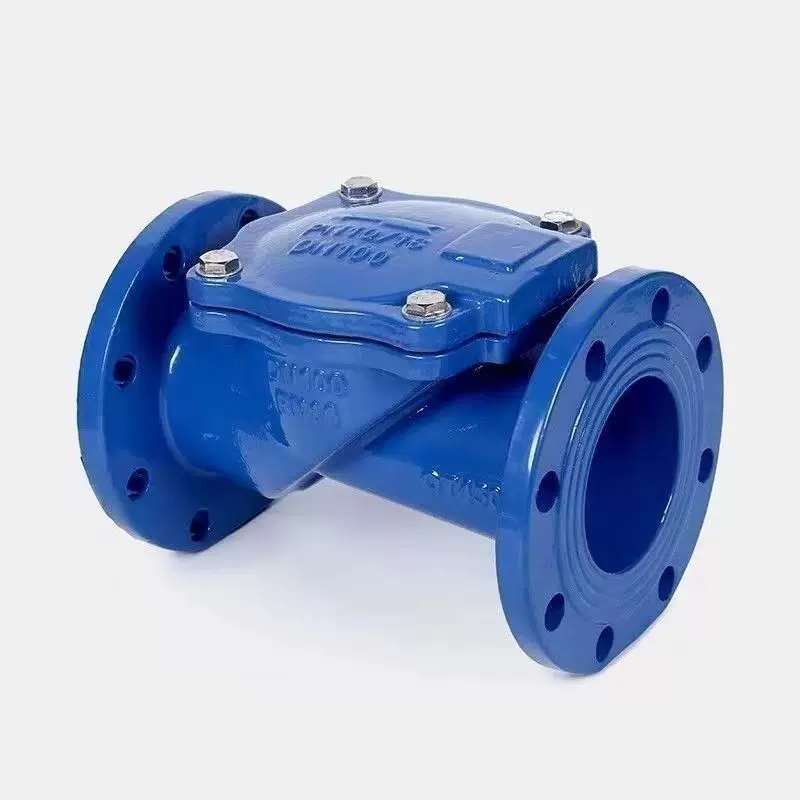
The traditional workhorse. A disc swings on a hinge at the top of the valve body. Forward flow pushes the disc open; reverse flow swings it shut . Swing checks offer low pressure drop and handle dirty fluids well, but their long disc travel makes them prone to slamming and water hammer, especially in larger sizes . They’re generally not recommended for systems where water hammer is likely to occur.
Dual Plate Check Valve
A modern, compact alternative. Two spring-loaded semicircular plates snap shut the moment flow stops . The short travel distance and spring assist make dual plate check valves nearly “non-slam”—they close before significant reverse velocity develops. They’re lightweight, fit between flanges (wafer style), and can be installed vertically or horizontally.
Silent Check Valve
Designed specifically to eliminate water hammer. A spring-loaded disc moves horizontally along the flow axis. The spring closes the valve the instant forward flow stops—before reverse flow can develop . Silent check valves are the preferred choice for vertical piping and pump discharge lines where water hammer is a concern. They operate quietly and can last for decades with minimal maintenance.
Ball Check Valve
A spherical ball sits on a seat. Forward flow lifts the ball; reverse flow pushes it back into the seat . Simple and reliable, but the ball can wear over time and may require more maintenance than other designs. Best suited for smaller nominal diameters.
Lift Check Valve
A guided disc lifts off the seat when flow is forward and drops back when flow reverses. Similar to a globe valve in body shape. Lift checks are suitable for high-pressure applications, but they create higher pressure drop than swing or dual plate designs .
Tilting Disc Check Valve
A disc pivots on a shaft positioned off-center. The tilting motion allows for faster closure than a swing check while maintaining low pressure drop. These are often used in large-diameter, high-velocity applications where both efficiency and surge protection matter .
How to Select the Right Check Valve
Selecting a check valve isn’t as simple as matching the pipe size. Here’s what you actually need to consider.
Step 1: Know Your Flow Conditions
Check valves are flow-sensitive devices. They need sufficient flow to open fully and stay open. If a valve is oversized, the flow won’t be strong enough to hold the disc open—it will chatter, flutter, and wear out prematurely.
To keep a check valve fully open, you typically need a fluid velocity of 10 to 12 feet per second for liquids like water . Process and HVAC systems often operate at 4 to 8 feet per second, which means proper sizing is even more critical.
Step 2: Understand Your System’s Surge Potential
If your system has the potential for water hammer—and most pump discharge lines do—you need a check valve designed to handle it. Swing check valves are the worst choice here. Dual plate and silent check valves close much faster and generate far less surge pressure .
For critical applications like large pumping stations, consider valves with hydraulic dampers or multi-stage closing mechanisms. These allow the valve to close quickly at first, then slow down as it approaches the seat, minimizing both backflow and surge pressure.
Step 3: Match the Valve Type to the Application
- Clean fluids, horizontal lines: Swing check or dual plate check
- Dirty fluids or slurries: Swing check with metal seats
- Pump discharge, water hammer concern: Silent check or dual plate check
- Vertical piping: Silent check or lift check (vertical design)
- High pressure, small diameter: Ball check or lift check
- Large diameter, low pressure drop: Swing check or tilting disc check
Step 4: Consider Installation Orientation
Check valves are not all orientation-independent. Swing checks need to be installed horizontally or with flow upward. Lift checks are typically installed horizontally. Silent checks can be installed in any orientation, which is one of their key advantages .
Always check the manufacturer’s installation requirements. Installing a check valve in the wrong orientation can prevent it from closing properly or cause it to wear out prematurely.
Step 5: Think About Maintenance
Check valves are often the forgotten component—until they fail. When selecting a valve, consider how easy it will be to inspect and maintain. Some designs allow for easy access to the internal components; others require removing the entire valve from the line.
For critical systems, consider valves with position indicators or monitoring capabilities. Some modern check valves can signal when the disc is stuck open or when wear has reached a critical point, allowing you to address problems before they cause failures.
Conclusion
Check valves may not be the most glamorous components in your piping system. They don’t have handles to turn or actuators to program. But their role is absolutely critical.
When a pump shuts down unexpectedly, a check valve is the only thing standing between your equipment and a catastrophic backflow event. When water hammer threatens to burst your pipes, a properly selected check valve can absorb the surge. When contamination could ruin an entire production batch, a check valve keeps the clean side clean.
The key is to select the right valve for your specific application. Consider your flow conditions, surge potential, installation orientation, and maintenance requirements. Don’t just grab whatever is on the shelf—understand what you’re protecting against and choose accordingly.
A well-selected check valve will run quietly for years, doing its job without complaint. A poorly selected one will fail when you need it most.
Post time: Oct-10-2026