

Meta Description:
Learn the differences between centerline, double offset, and triple offset butterfly valves, including soft seal vs hard seal designs, working principles and applications.
Centerline vs Double Offset vs Triple Offset Butterfly Valve
Introduction: Why Are Butterfly Valves Designed Differently?
Butterfly valves are one of the most widely used valves in industrial piping systems. Due to their simple structure, lightweight design, compact size, and quick 90-degree operation, they are commonly used in water treatment, HVAC systems, power plants, oil and gas industries, and chemical applications.
The working principle of a butterfly valve is simple. A circular disc is installed inside the valve body, and the disc rotates 90 degrees through the valve stem to control the flow of fluid.
However, the biggest challenge of butterfly valve design is sealing performance.
When the valve closes, the disc must tightly contact the valve seat to prevent leakage. In traditional designs, the disc continuously rubs against the seat during opening and closing. Over time, this friction can cause sealing wear, higher operating torque, leakage problems, and shorter service life.
To solve these problems, engineers developed different butterfly valve structures, including:
● Centerline butterfly valves
● Double offset butterfly valves
● Triple offset butterfly valves
At the same time, different sealing materials created two main sealing types:
● Soft seal butterfly valves
● Hard seal butterfly valves
The offset structure mainly reduces friction and improves valve performance, while the sealing material determines temperature resistance, pressure capability, and application range.
1. Butterfly Valve Working Principle
A butterfly valve mainly consists of a valve body, disc, stem, and seat. When the actuator rotates the valve stem, the disc turns around its axis.
In the open position, the disc is parallel to the pipeline, allowing fluid to pass through. In the closed position, the disc rotates perpendicular to the flow direction and presses against the seat to stop the medium
Compared with other valve types, butterfly valves offer several advantages:
● Fast operation
● Compact structure
● Lower weight
● Lower installation cost
● Suitable for large diameter pipelines
However, reducing friction while maintaining reliable sealing has always been the key challenge in butterfly valve development. This is why different designs such as centerline, double offset, and triple offset butterfly valves were created.
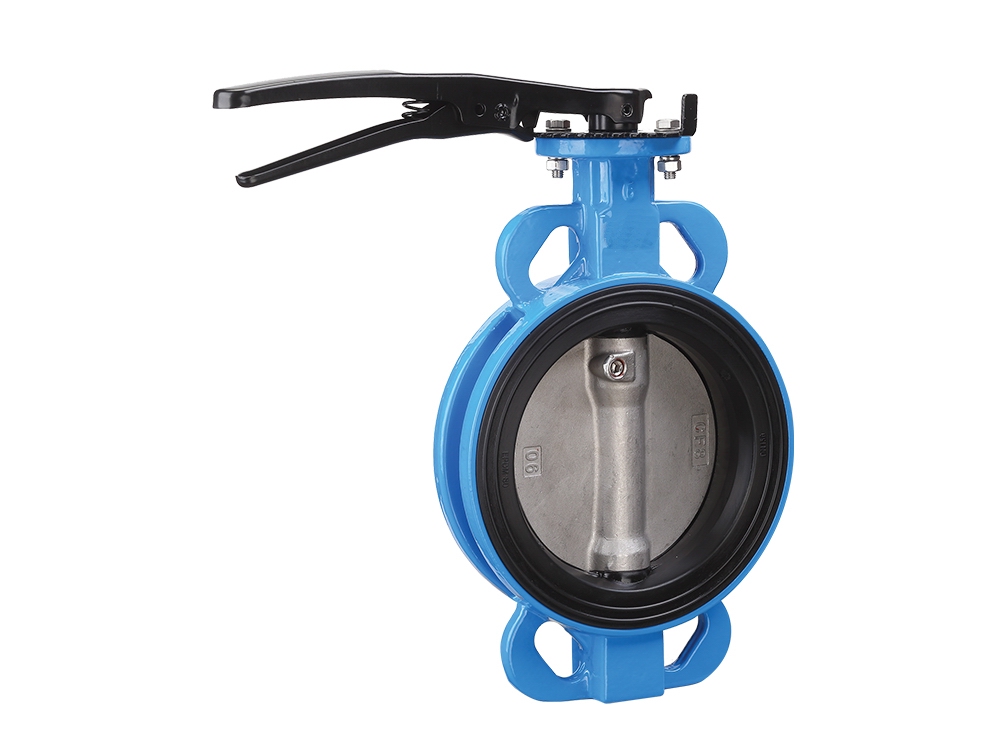
2. Centerline Butterfly Valve: The Simple and Economical Choice
A Centerline Butterfly Valve, also called a concentric butterfly valve, is the most traditional butterfly valve design. In this structure, the center of the disc, valve stem, and valve body are aligned on the same axis.
Because of its simple design, the centerline butterfly valve is widely used in applications where cost efficiency and reliable sealing are important.
How Does a Centerline Butterfly Valve Work?
During operation, the disc rotates around the central axis. When closing, the disc contacts the valve seat throughout most of the closing process.
Because the disc and seat remain in contact, friction occurs during operation.
For this reason, most centerline butterfly valves use soft sealing materials such as:
● EPDM
● NBR
● PTFE
The elasticity of soft materials helps compensate for small manufacturing errors and provides excellent shut-off performance.
Advantages and Applications
The main advantages of centerline butterfly valves include:
● Simple structure
● Low manufacturing cost
● Easy maintenance
● Excellent sealing performance
They are commonly used in:
● Water supply systems
● HVAC systems
● Cooling water pipelines
● Water treatment plants
● General industrial applications
However, the main limitation is that continuous friction can reduce service life. In addition, soft sealing materials have temperature limitations, making them unsuitable for high-temperature steam or oil applications.
3. Double Offset Butterfly Valve: Less Friction and Longer Service Life
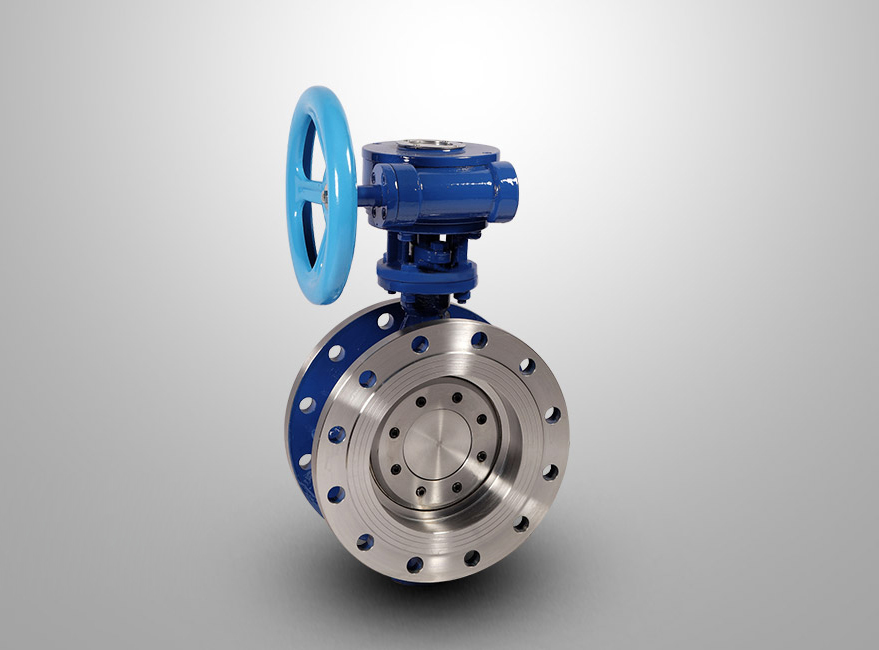
A Double Offset Butterfly Valve was developed to overcome the friction problems of centerline designs.
The double offset structure moves the valve stem away from:
● The center of the disc
● The centerline of the valve body
● This changes the movement path of the disc during operation.
How Does Double Offset Design Work?
Unlike a centerline butterfly valve, the disc of a double offset butterfly valve quickly moves away from the seat after opening begins.
As a result:
● Friction is significantly reduced
● Operating torque becomes lower
● Seat wear is minimized
● Service life is extended
The disc only contacts the sealing surface during the final closing stage, creating reliable sealing.
Applications of Double Offset Butterfly Valves
Due to better durability and mechanical performance, double offset butterfly valves are widely used in:
● Large water supply projects
● Pump stations
● Hydropower systems
● Industrial cooling systems
● Large pipeline networks
Compared with centerline butterfly valves, double offset designs are a better choice when larger sizes, longer service life, and more frequent operation are required.
4. Triple Offset Butterfly Valve: The High Performance Solution
A Triple Offset Butterfly Valve is the most advanced design among butterfly valves.
Although double offset butterfly valves reduce friction, the disc still contacts the sealing surface during the final closing stage.
The triple offset design solves this problem by creating a special sealing geometry.
How Does a Triple Offset Butterfly Valve Work?
A triple offset butterfly valve adds a third offset based on the double offset design.
The most important improvement is the angled conical sealing surface.
During opening:
● The disc immediately separates from the seat.
● The sealing surfaces do not slide against each other.
● Friction is almost eliminated.
During closing:
● The disc approaches the seat smoothly.
● Contact happens only at the final closing point.
● A strong metal seal is created.
This is why triple offset butterfly valves are often described as having a zero-friction sealing design.
Advantages and Applications
The main advantages include:
● Extremely low friction
● Long service life
● Excellent high temperature resistance
● High pressure capability
Triple offset butterfly valves are commonly used in demanding industries such as:
● Steam pipelines
● Power plants
● Oil and gas systems
● Petrochemical plants
● Chemical processing industries
For high-temperature and critical applications, triple offset butterfly valves are usually the preferred solution.
5. Soft Seal vs Hard Seal Butterfly Valve
Soft seal and hard seal describe the sealing materials used in butterfly valves.
They are different from offset structures.
Soft Seal Butterfly Valve
Soft seal butterfly valves use elastic materials such as:
● EPDM
● NBR
● PTFE
Advantages:
● Excellent sealing performance
● Lower cost
● Good leakage control
● Easy maintenance
Limitations:
● Limited temperature resistance
● Lower wear resistance
● Not suitable for harsh operating conditions
Typical applications:
● Water systems
● HVAC
● Cooling systems
● General pipelines
Hard Seal Butterfly Valve
Hard seal butterfly valves use metal sealing surfaces, usually stainless steel or special alloys.
Advantages:
● High temperature resistance
● Better wear resistance
● Suitable for high pressure applications
● Longer service life in harsh environments
Typical applications:
● Steam
● Thermal oil
● Oil and gas
● Power plants
● Chemical industries
Although hard seal butterfly valves have higher manufacturing costs, they provide better performance under demanding conditions.
6. How to Choose the Right Butterfly Valve?
The correct butterfly valve depends on operating conditions.
Normal Water and HVAC Systems
Recommended:
Soft Seal Centerline Butterfly Valve
Reason:
● Economical
● Reliable sealing
● Easy maintenance
Large Water Projects and Pump Stations
Recommended:
Double Offset Butterfly Valve
Reason:
● Lower friction
● Longer service life
● Better performance for large pipelines
High Temperature and High Pressure Applications
Recommended:
Hard Seal Triple Offset Butterfly Valve
Reason:
● Metal sealing design
● Excellent temperature resistance
● Reliable operation under severe conditions
Frequently Asked Questions
What is the difference between double offset and triple offset butterfly valves?
A double offset butterfly valve reduces friction through two offset positions, while a triple offset butterfly valve adds a special angled sealing design that almost eliminates friction.
Triple offset butterfly valves provide higher performance but are mainly used for demanding applications.
When should I choose a soft seal butterfly valve?
Soft seal butterfly valves are suitable for water, HVAC, cooling systems, and normal temperature applications where excellent sealing and cost efficiency are important.
Why are triple offset butterfly valves used for high temperature applications?
Triple offset butterfly valves use metal sealing systems and zero-friction operation, allowing them to handle high temperatures, high pressure, and severe working conditions.
Conclusion
Butterfly valve designs have evolved from simple centerline structures to advanced double offset and triple offset designs to achieve better sealing performance and longer service life.
A Centerline Butterfly Valve is an economical solution for general water and HVAC applications.
A Double Offset Butterfly Valve provides lower friction and improved durability for large pipelines and industrial systems.
A Triple Offset Butterfly Valve offers the highest performance for high-temperature, high-pressure, and critical applications.
Understanding the differences between centerline, double offset, triple offset, soft seal and hard seal butterfly valves helps engineers and buyers select the right valve solution for each application.
Post time: Jul-20-2026